Tesla Window Tinting in Concord, NC

Tesla vehicles feature iconic minimalist glass architecture, expansive panoramic roofs, and sweeping windshield lines that create airy interior spaces. However, navigating Cabarrus County during peak summer months exposes these expansive glass surfaces to tremendous thermal load, forcing the climate control system to work harder. Specialized Tesla Window Tinting in Concord, NC mitigates radiant solar heat and preserves vehicle efficiency during daily commutes along Interstate 85.
Because battery range correlates directly with auxiliary energy draw, keeping the interior cool through passive heat rejection is particularly beneficial for electric vehicles. Ceramic films reject infrared wavelengths without relying on metalized components, ensuring that onboard telemetry, cellular updates, navigation signals, and Key Card sensors operate without interference. Protecting sensitive touchscreen displays and premium synthetic seating from severe ultraviolet exposure maintains pristine cabin value over long-term ownership.
Achieving flawless film fitment on modern electric vehicles requires meticulous attention to detail and model-specific glass geometry. The oversized rear glass found on Model 3 and Model Y demands single-sheet installations and strict moisture control to protect sensitive electronic modules situated beneath the rear parcel shelf. Proper application safeguards sophisticated factory systems while providing the understated aesthetic and thermal relief EV drivers expect.
Table of Contents
Jump directly to any section of this comprehensive service guide.
Thermal Management and Solar Heat Dynamics in Electric Vehicles
Tesla vehicles feature expansive glass architecture, panoramic roofs, and sweeping windshield designs that flood the minimalist cabin with natural daylight. However, this expansive glass creates significant solar greenhouse conditions during sunny North Carolina summers. Radiant heat penetrating untreated glass rapidly elevates cabin temperatures, triggering Cabin Overheat Protection and running auxiliary cooling fans even while parked outdoors.
In an electric vehicle, cabin climate management draws directly from the main high-voltage battery pack rather than utilizing excess heat from an internal combustion engine. Operating air conditioning compressors at maximum output over extended highway drives drains stored battery energy and reduces overall driving range. Upgrading glass surfaces with high-performance window film dramatically lowers the thermal load entering the passenger cabin.
Nano-ceramic window films excel at intercepting radiant heat at the glass boundary before it penetrates interior surfaces. By filtering out dense infrared rays, the film keeps dashboard materials, steering wheels, and synthetic leather seats cool to the touch. This allows the vehicle's automatic climate system to maintain a pleasant cabin climate at substantially lower fan speeds and energy consumption rates.
Investing in specialized Tesla Window Tinting in Concord, NC delivers a noticeable improvement in daily driving comfort along regional highways. Commuters traveling between Concord and Charlotte experience steady, uniform cabin temperatures without constant blast from AC vents. Passive thermal regulation through advanced ceramic tint represents one of the most effective upgrades for maximizing electric vehicle efficiency.
Non-Metallic Ceramic Film and EV Signal Compatibility
Modern electric vehicles depend heavily on an intricate suite of wireless communication systems to support navigation, vehicle telemetry, and active safety systems. Cellular transceivers, dual-band Wi-Fi antennas, global positioning sensors, and Key Card proximity readers are strategically embedded within pillars, mirrors, and glass boundaries. Choosing the correct automotive film formulation is essential to prevent unintended disruption to these sensitive digital pathways.
Older metallic window films achieve heat rejection by laminating microscopic layers of aluminum, nickel, or bronze onto polyester backings. While somewhat effective at reflecting heat, these conductive metal layers act as electromagnetic shields that attenuate radio frequency signals. Installing metallic tint on an EV can degrade smartphone connectivity, cause satellite navigation lag, and reduce Key Card detection range at the B-pillar sensor.
Advanced nano-ceramic films eliminate this complication entirely by utilizing non-metallic, non-conductive ceramic nanoparticles. These sub-microscopic particles target and absorb infrared wavelengths without presenting any physical barrier to radio frequencies, cellular signals, or microwave telemetry. As a result, onboard autonomous driving systems, over-the-air software updates, and mobile hotspot connections operate with full factory fidelity.
In addition to signal transparency, non-metallic ceramic films deliver outstanding optical clarity without the hazy rainbow effect often caused by metalized layers under polarized sunglasses. Drivers enjoy crisp, distortion-free views of the road ahead during both high-glare midday sun and low-light night driving. Selecting signal-friendly ceramic tint ensures your vehicle maintains peak digital connectivity and exceptional passenger comfort.
Meticulous Step-by-Step Installation for Tesla Glass
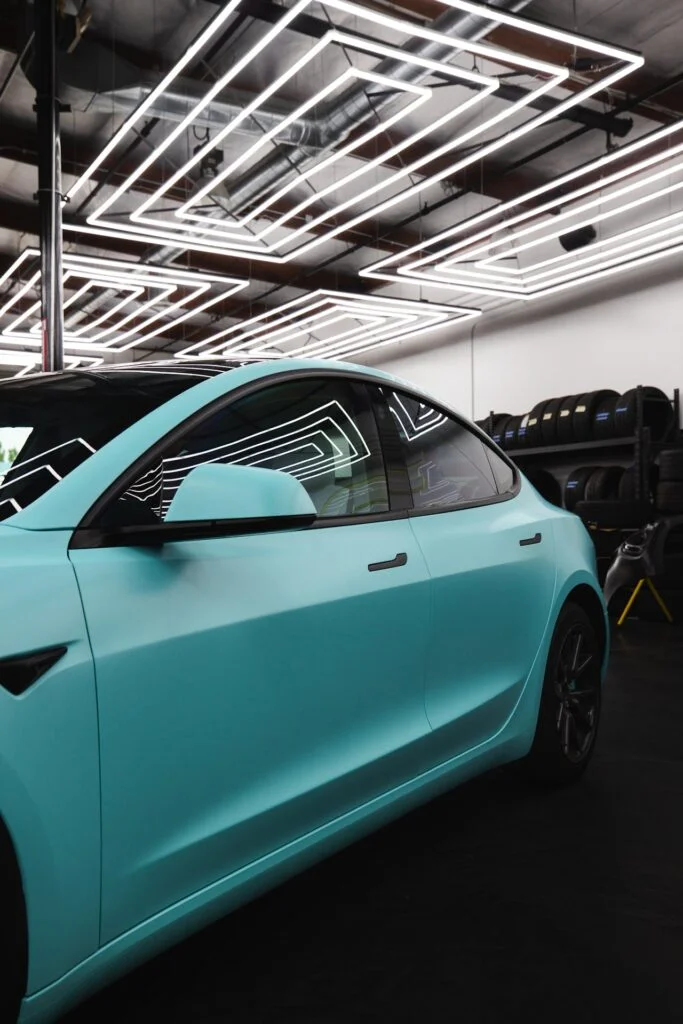
Installing window film on a Tesla demands exceptional technical precision due to the vehicle's unique electronic systems and oversized glass panels. The massive panoramic roof and one-piece rear window found on models like the Model 3 require specialized handling to prevent creases or optical distortion. Professional installers follow an exacting step-by-step procedure to guarantee flawless results.
- 1Electronic Masking and Soak-Rope Placement: Technicians place specialized moisture-absorbing soak ropes along the base of the windshield and rear parcel shelf, completely sealing sensitive audio amplifiers and electronic control modules from water contact.
- 2Computerized Plotting and Pattern Preparation: Automotive ceramic film is cut using computerized digital plotters loaded with Tesla CAD profiles, ensuring perfect perimeter margins around cameras and sensors without razor blades contacting the glass.
- 3Large-Format Dry Heat-Shrinking: The oversized rear glass film is draped over the exterior glass and carefully heat-formed using precision heat guns, shrinking compound fingers to match the extreme glass curvature seamlessly.
- 4Interior Positioning and Dual-Pass Squeegeeing: After thoroughly decontaminating the interior glass, technicians spray purified slip solution, position the one-piece film, and perform methodical squeegee passes to extract all trapped water.
Protecting the vehicle's sensitive electronic components during the wet installation process is paramount. Technicians utilize lint-free micro-fiber drop cloths and dedicated dash shields to catch every drop of runoff fluid. Meticulous moisture management ensures that onboard computer systems remain entirely safe throughout the installation.
After final squeegee passes, technicians inspect the film perimeter under focused LED inspection lights, applying targeted heat along window edges to set the adhesive. Delivering a flawless single-piece rear window installation eliminates ugly seam lines, providing an uninterrupted panoramic aesthetic. Adhering to these strict installation standards ensures your Tesla receives world-class thermal protection.
Evaluating TSER and Infrared Heat Rejection Metrics
Selecting the optimal window film for a Tesla involves understanding how solar energy interacts with automotive glass and how performance metrics reflect real-world cabin cooling. Total Solar Energy Rejected (TSER) serves as the primary benchmark for measuring overall heat-deflection capability. TSER measures the total percentage of solar energy deflected across ultraviolet, visible light, and infrared spectrums.
Electric vehicle drivers in Concord benefit most from films that maximize infrared rejection (IR rejection) alongside high TSER ratings. Infrared wavelengths between 780 and 2500 nanometers are responsible for the intense radiant heat felt on passengers' skin and vehicle touchpoints. High-performance nano-ceramic films reject between 85% and 95% of infrared heat, preventing rapid heat buildup inside the glass cabin.
By stopping thermal radiation at the glass boundary, ceramic film substantially lowers the interior cabin temperature when the vehicle is parked under direct Carolina sunlight. This directly reduces the operational burden placed on the vehicle's Cabin Overheat Protection system, preventing high-voltage battery drainage while the car sits idle. On the highway, the vehicle's climate control system maintains comfortable temperatures at low blower settings, preserving driving range.
Furthermore, premium ceramic films achieve outstanding TSER performance across a broad range of Visible Light Transmission (VLT) levels. Drivers who prefer a lighter, factory-style appearance can select a 70% or 50% VLT ceramic film on the windshield and roof while still enjoying substantial heat rejection. Investing in high-performance ceramic film guarantees superior thermal comfort and maximizes electric vehicle efficiency.
Piedmont Climate Demands on EV Battery Efficiency
Operating an electric vehicle in the Piedmont region of North Carolina presents distinct seasonal efficiency challenges centered around climate control. During sweltering summer months in Cabarrus County, outdoor temperatures frequently exceed 90°F with oppressive humidity. These high-heat environments force the vehicle's air conditioning compressor to draw substantial high-voltage battery power to keep the expansive glass cabin cool.
Because an electric vehicle draws all auxiliary power directly from its main battery pack, high cooling demands noticeably impact total driving range. Untreated panoramic roofs and large windshields channel radiant heat directly into the cabin, prompting Cabin Overheat Protection to activate repeatedly while parked. Installing nano-ceramic window film creates a thermal barrier that reduces solar heat gain, significantly lowering cooling energy consumption.
In the winter, Piedmont mornings frequently bring freezing frost and cold winds that temporarily reduce battery chemistry efficiency. Pre-conditioning the cabin while plugged in is common practice, but retaining that warmth during commutes along Interstate 85 requires insulation. High-performance window films act as a mild insulating barrier, helping to retain interior thermal energy and reducing heater blower draw.
By stabilizing cabin temperatures across all seasons, ceramic window film helps preserve battery range for what matters most: driving. EV owners experience fewer charging stops and more consistent efficiency figures during daily commutes and weekend road trips. Upgrading glass surfaces with ceramic technology represents an intelligent investment in electric vehicle performance.
Post-Tint Care and Touchscreen Electronics Protection
Maintaining tinted glass on a Tesla requires gentle cleaning practices and careful attention to interior electronic components. Because Tesla cabins feature minimalist layouts centered around large, high-resolution touchscreens, preserving both the glass and the display requires informed maintenance. Adhering to simple care guidelines ensures long-lasting clarity and trouble-free operation.
Immediately following installation, vehicle owners must observe a curing period of three to five days before rolling down windows or cleaning glass. Microscopic pockets of residual mounting moisture naturally dissipate through the semi-permeable polyester film during this time. Allowing the adhesive to cure undisturbed ensures strong, permanent bonding along window perimeters and weather seals.
When cleaning tinted glass, never use window cleaners containing ammonia, vinegar, or abrasive solvents. These caustic chemicals degrade the film's protective hard coat, leading to discoloration, hazing, and adhesive failure over time. Use dedicated ammonia-free glass cleaners and clean, plush microfiber towels to gently remove fingerprints and interior haze.
Additionally, take care when cleaning the central touchscreen display. Avoid spraying liquid cleaners directly onto the screen or surrounding dashboard surfaces, as overspray can seep into display edges or sensitive wiring harnesses. Instead, lightly mist a clean microfiber towel with dedicated screen cleaner and gently wipe the display. Mindful maintenance preserves both your window film and high-tech cabin electronics.
Maximizing Electric Driving Comfort and Resale Value
Equipping your Tesla with professional nano-ceramic window tint delivers enduring aesthetic, functional, and financial rewards. Electric vehicles are built for modern convenience and performance, and optimizing cabin comfort elevates the overall driving experience. In the sunny Carolina climate, high-performance tint transforms daily driving into a tranquil, relaxing journey.
Shielding the minimalist cabin from intense solar radiation prevents premature fading, drying, and cracking of synthetic vegan leather seating and door trim. Preserving interior materials in pristine, factory-original condition significantly enhances trade-in value and private resale appeal. Used electric vehicle buyers in the Charlotte metro area actively seek vehicles that have been properly protected against solar damage.
Moreover, ceramic tint reduces blinding optical glare from bright sunshine and reflective highway surfaces, minimizing eye fatigue during commutes along Route 29 and I-85. Drivers enjoy clear, high-contrast visibility through side windows and mirrors without straining against harsh light. Improved visual comfort contributes directly to safer, more relaxed driving.
Ultimately, ceramic window tint is one of the most effective and valuable upgrades available for Tesla owners. By harmonizing interior heat rejection, battery efficiency, and elegant privacy, it enhances every aspect of electric vehicle ownership. Professional installation ensures your Tesla remains cool, stylish, and protected for years of emission-free driving.
Contact Us Today
Have questions or need emergency service? Reach out to our dedicated team anytime.
Infinite Auto Works
Fast, dependable support and honest pricing across our service area.
Frequently Asked Questions
Find clear, helpful answers to common questions regarding our process, pricing, equipment, and satisfaction guarantee.
Frequently Asked Questions
Related Articles
Cybertruck Window Tinting in Concord, NC
Cybertruck Window Tinting in Concord, NC | Heat Rejection Tint
Read Article →Ford Window Tinting in Concord, NC
Ford Window Tinting in Concord, NC | Trucks, SUVs & Mustangs
Read Article →Window Tinting service in Concord, NC
Professional Window Tinting Service in Concord, NC | Infinite Auto Works
Read Article →